How do you get from Prague to Munich?
Two practical ways exist: a direct train or a long-distance bus. A cross-border EuroCity train, run jointly by Czech and German railways, goes from Praha hlavní nádraží (Prague’s main station) straight to München Hauptbahnhof, with no change of train. Buses from Florenc, Prague’s main coach station, are usually cheaper but often require a transfer at Nuremberg. Which option is better depends less on price than on where in Prague the trip starts, and how much luggage comes along.
What are the actual options?
The train is operated as a joint EuroCity service between České dráhy, the Czech national operator, and Deutsche Bahn, its German counterpart. It runs the route via Plzeň and Nuremberg. Current timetables and fares sit on both operators’ own booking engines, since fares shift with demand and advance-purchase windows. Treat any number quoted elsewhere as a starting estimate, not a figure to book against.
The bus market is split between two main carriers: FlixBus, the German-founded network with the wider European footprint, and RegioJet, the Czech operator better known locally for its trains. Both publish live routes and prices on their own sites. Some of their Munich-bound lines run direct; others are scheduled with a stop, and sometimes a change of vehicle, at Nuremberg’s central bus station (ZOB). Which pattern applies on a given date is not fixed — check the specific departure before assuming either way.
| Factor | Train (EC, ČD/DB) | Bus (FlixBus/RegioJet) |
|---|---|---|
| Starting point | Praha hlavní nádraží | Florenc bus station |
| Change of vehicle | None — through train | Often required at Nuremberg ZOB |
| Typical journey | Roughly 5–6 hours | Roughly 6–7 hours, more with a tight connection |
| Price position | Usually the pricier option | Usually 30–40% cheaper, per both operators’ own fare pages |
| Luggage handling | Carried on, no re-loading | Unloaded and re-loaded at any transfer stop |
Is the bus or the train better — the actual decision rule
This is the part most comparisons skip. The answer depends on two things: where the trip starts, and what it’s carrying.
If the day starts near the main train station with normal suitcases, the direct EC train is the safer call. It removes the one real risk in this whole journey: a missed connection at Nuremberg. A delayed bus arriving into ZOB can miss its onward departure. That adds 45 to 60 minutes, sometimes more, waiting for the next service. A through train has no such seam.
If the trip starts near Florenc and the budget is tight, the bus usually wins on cost, even accounting for the transfer. The saving — commonly 30 to 40% against the train fare, based on list prices published by RegioJet and FlixBus — is large enough to justify the extra hour and the extra step of changing coaches.
Group travelers with heavy luggage should lean train. Every transfer means lifting bags off one vehicle and onto another, in a foreign bus station, on a schedule. That is a minor cost for a backpack. It is a real one for a family with suitcases.


What changes the journey time?
Three things move the number, whichever mode is chosen.
- Border-crossing scheduling: both train and bus cross into Germany without a passport check under Schengen rules, but timetables still build in padding around the frontier.
- The Nuremberg stop: it is the structural chokepoint for buses, and the reason a “5-hour” quote on one departure can become 6.5 hours on another.
- Domestic delays on either rail network: German and Czech rail punctuality data is published separately by each operator, not combined for this route.
None of this is exotic. It is the same friction that applies on other cross-border routes out of Prague — the kind covered in more detail for the Prague–Vienna route and the Prague–Berlin timing comparison.
Where does each journey actually start and end?
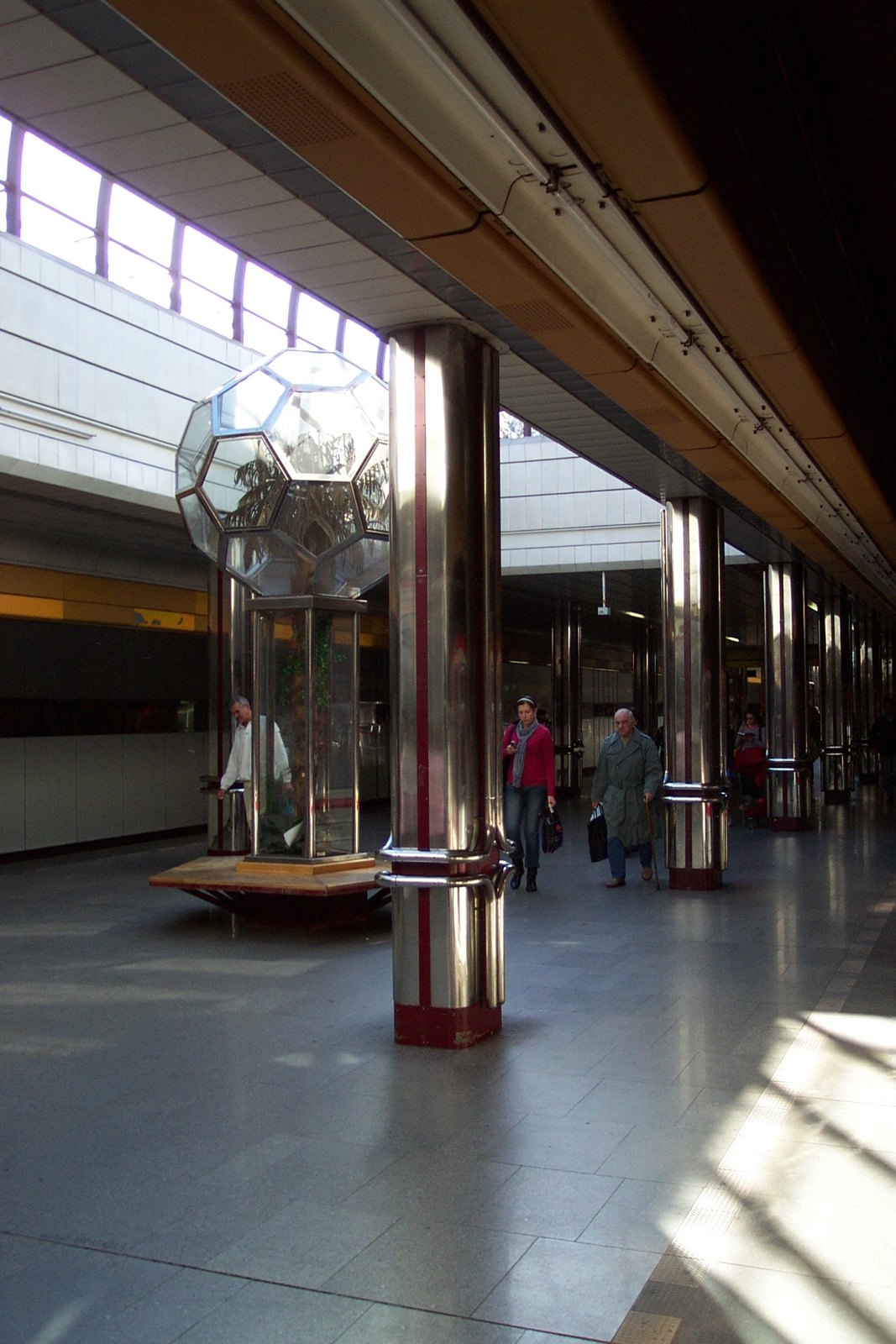
The train leaves from Praha hlavní nádraží, a short walk or one metro stop from the historic center. The bus leaves from Florenc, on the northeastern edge of the center, served by its own metro station. Neither station requires a taxi from most central accommodation. For a first visit to the city, the practicalities of using either station — tickets, luggage lockers, orientation — are covered in the first-time-in-Prague hub.
On arrival, München Hauptbahnhof and the city’s main bus terminal both sit close to the center, so the choice made in Prague does not create an equivalent problem at the Munich end.

Does booking in advance matter?
Yes, for both modes. Train and bus fares on this corridor are yield-managed: the earliest tickets released are typically the cheapest, and the gap between an early and a last-minute fare can be wide. Neither ČD, Deutsche Bahn, FlixBus nor RegioJet publishes a fixed Prague–Munich price; each shows only the live fare for a selected date. That is the figure to book against, not anything quoted in an article.
For planning the rest of a Prague stay around this kind of day trip, the day trips archive and the practical information hub cover tickets, timing, and the city’s crowd calendar in more depth. Readers weighing whether to build a longer onward itinerary from Munich, rather than a single round trip, may also find the getting-around archive useful for comparing corridors.
The short version holds regardless of season: train for certainty and comfort, bus for cost, and Florenc versus hlavní nádraží as the practical tie-breaker.

Access Prague is an independent guide written from published, checkable sources. We have not visited the places described here and we do not publish personal recommendations or invented ‘local favorites’ — where something is singled out as notable, we say who says so. Opening times, fares, closures and prices change at short notice, so treat everything here as a starting point and confirm with the museum, operator or venue directly before building a day around it. We give no advice on visas, insurance, health or safety; use your own government’s official guidance for those.
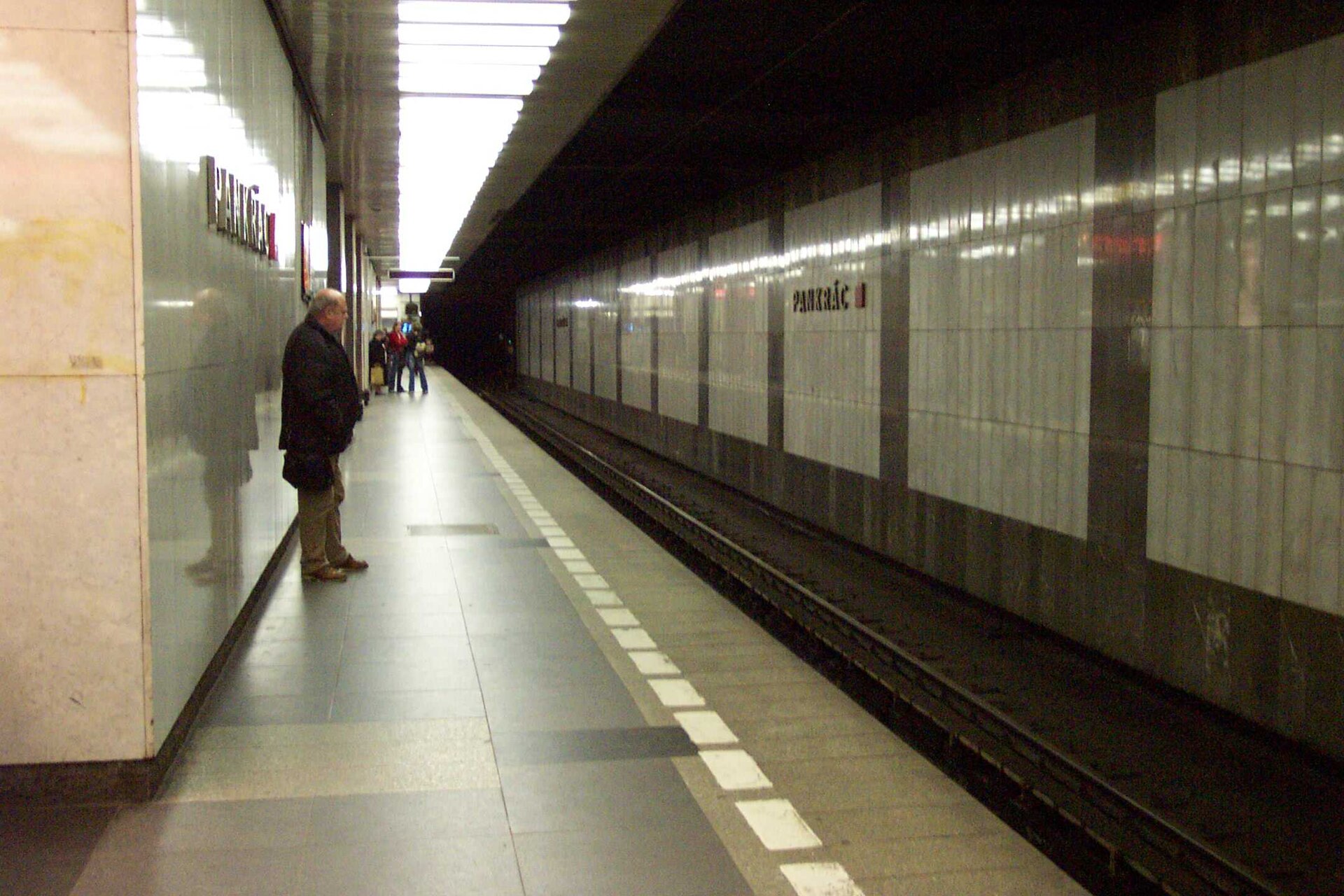
Featured image: Photo by User:Aktron, source, CC BY-SA 3.0
