One day in Prague fits four things well: Prague Castle’s exterior and one interior sight, Charles Bridge, Old Town Square, and a walk toward Wenceslas Square. It does not fit a full Castle interior tour plus Charles Bridge at midday. Which one you cut depends on your arrival time and the season — not on which sight is “better.”
What actually fits in one day?
A single day in Prague has a real ceiling. It is set by queues, not distances.
The old town is compact. Prague Castle, Charles Bridge, Old Town Square and Wenceslas Square sit within roughly a 25-minute walk of each other. Walking is not the bottleneck. Timed entry and crowd density are.
Two places cause almost all the delay: the Castle’s paid interior circuit, and Charles Bridge between roughly 10am and 4pm. Everything else in the classic four-stop list can be seen quickly, on foot, without a ticket.
Which two things should you actually cut?
The answer depends on when you arrive and what month it is. Below is the rule.
| Your situation | What to cut first | Why | The fix |
|---|---|---|---|
| Arriving after 11am, any season | Full Castle interior tour (St. Vitus Cathedral, Old Royal Palace, St. George’s Basilica combined ticket) | Entry is timed. A late start means the remaining slots bunch into the afternoon, alongside tour groups. | See the Castle courtyards and cathedral exterior only; skip the paid interiors this trip. |
| Visiting June–August, any arrival time | Charles Bridge between 10am and 4pm | This is the bridge’s peak window. Prague City Tourism and repeated visitor reports describe near-continuous foot traffic across its full width in summer. | Cross before 8am or after 9pm, when the bridge is comparatively open. |
| Arriving before 9am, shoulder season (April–May, September–October) | Nothing needs cutting | Both bottlenecks are avoidable with early movement. | Castle at opening, bridge before mid-morning, Old Town Square by midday. |
| Arriving after 11am, June–August (worst case) | Both: Castle interior and midday bridge crossing | The two bottlenecks stack. There is not enough day left to absorb both queues. | Castle exterior only; cross the bridge after 9pm instead, when Old Town’s evening light also suits Old Town Square. |
The logic is simple. Fix the two known bottlenecks first. Build everything else around them.
Confirm current opening hours and any timed-entry requirement directly with the Prague Castle Administration before planning around a specific slot; hours vary by season and by which buildings are open on a given day.
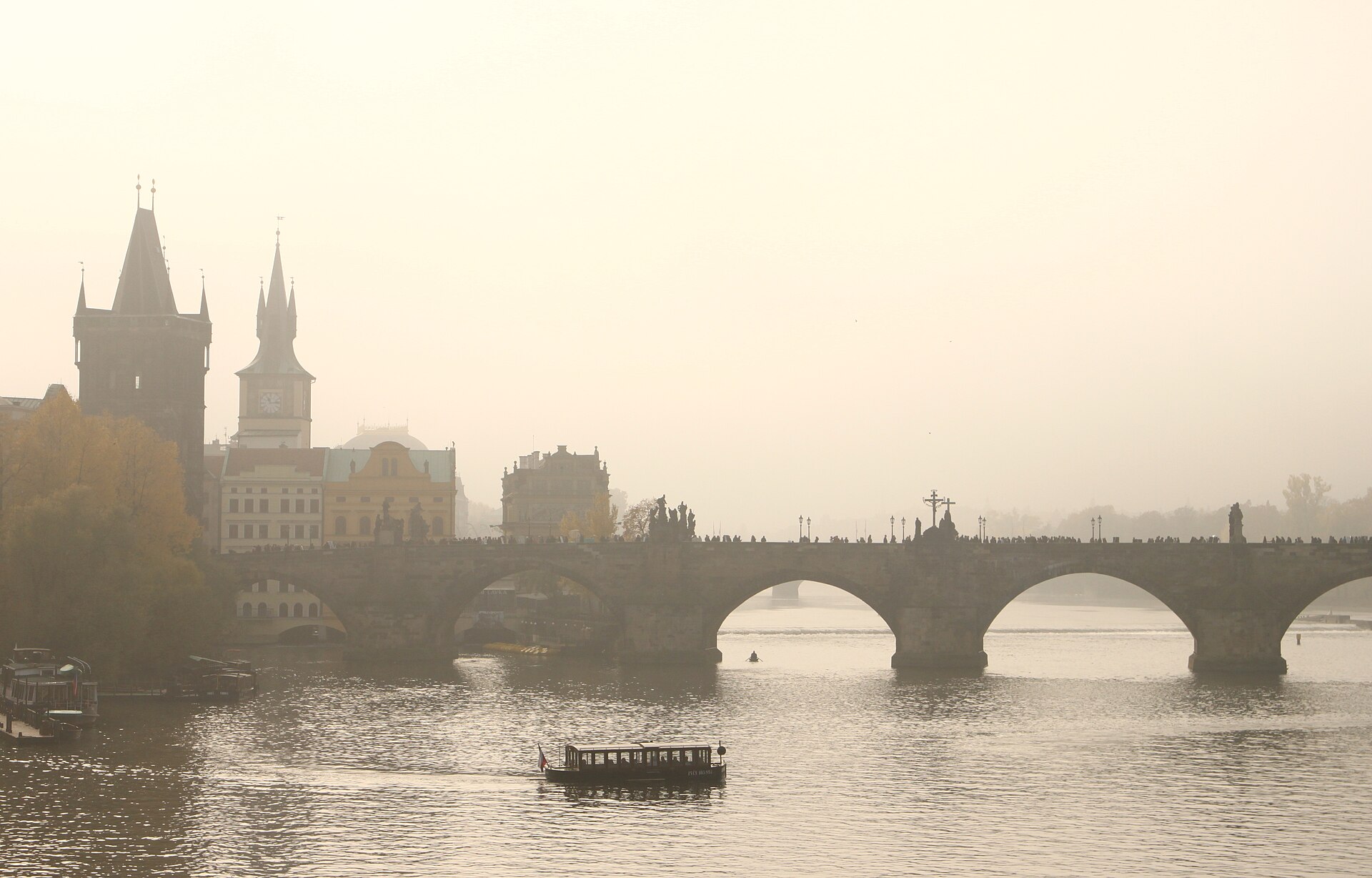

Is Prague Castle worth the queue?
Parts of it, yes — but not all of it, and not on a rushed schedule. The complex is real and large: it includes St. Vitus Cathedral, the Old Royal Palace, St. George’s Basilica, and Golden Lane, spread across a hilltop site above the Vltava.
UNESCO lists the historic center of Prague, including the Castle complex, as a World Heritage Site, citing its concentration of Gothic, Baroque and Renaissance building fabric. That designation covers the district, not any single ticket product.
The courtyards, the cathedral’s exterior, and the changing of the guard are free and unticketed. The paid circuit — inside the cathedral, the palace interiors, the basilica — is what has timed entry and queues.
On a one-day visit with a late start or a summer date, seeing the free exterior elements and skipping the paid interior is a defensible trade, not a compromise. It preserves time for the bridge and the old town.
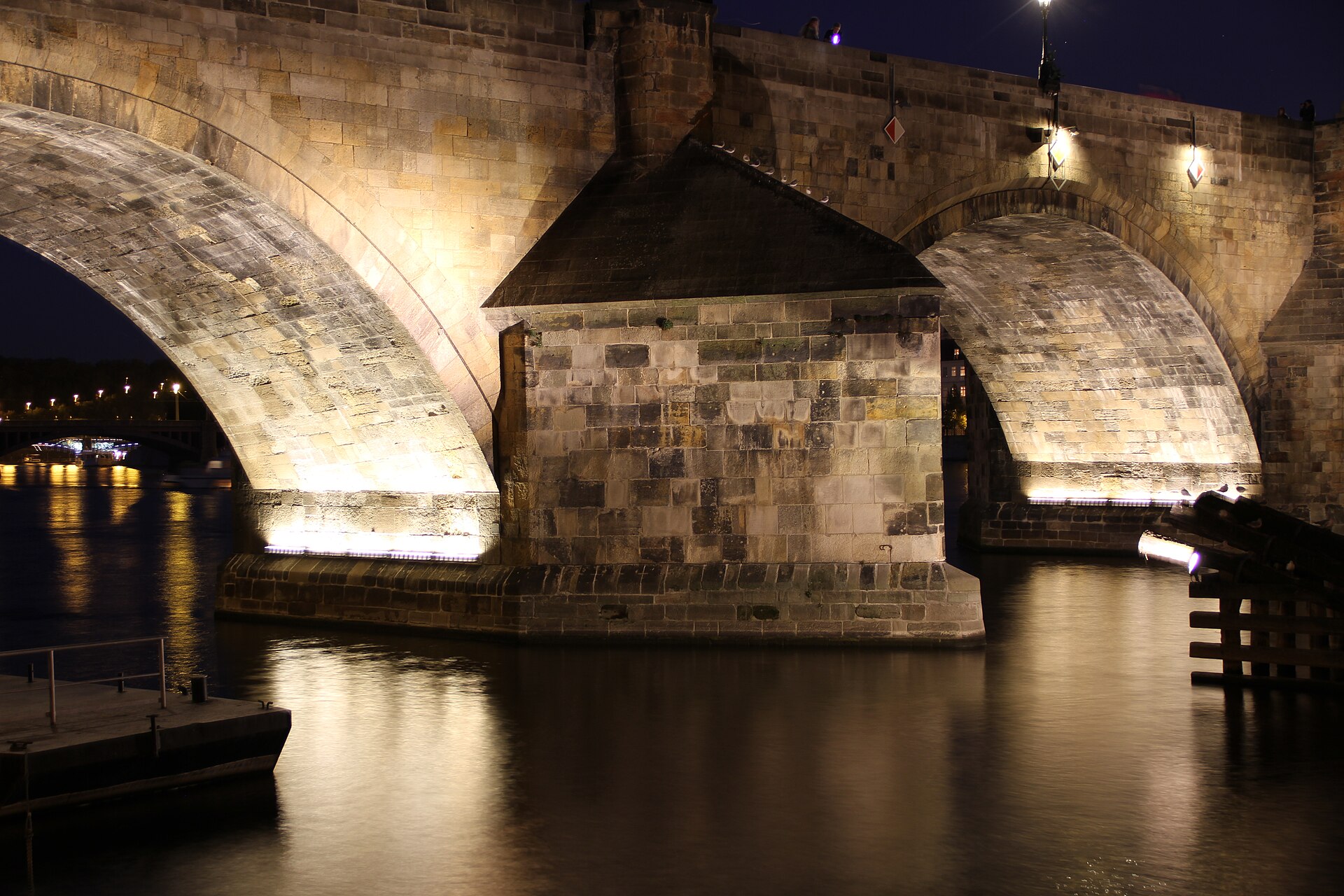

When should you cross Charles Bridge?
Before 8am, or after roughly 9pm. Outside that window in summer, the bridge functions less like a viewpoint and more like a corridor at capacity.
Charles Bridge is a 14th-century stone bridge, commissioned by Charles IV, lined with 30 Baroque statues, most of them copies of originals now held in the Lapidárium of the National Museum for conservation. That detail — original versus copy — is worth knowing before assuming a given statue is the historic piece itself.
The bridge is pedestrian-only and narrow relative to its foot traffic. Midday in July, that narrowness is the whole problem. Early morning, before the vendors and most tour groups arrive, the same walk takes minutes and shows the statues and the river without the crush.
An evening crossing works for a different reason: after 9pm, the day-trip coach groups have generally left, and the bridge is lit rather than lined with stalls.
What is Old Town Square actually for?
It is the historic market square of Staré Město (Old Town), and it is where the Astronomical Clock, the Church of Our Lady before Týn, and the Old Town Hall stand together. Unlike the Castle and the bridge, it does not have a hard bottleneck — it absorbs crowds better because it is open and large.
The Astronomical Clock, dated to 1410, performs an hourly mechanical show on the hour, drawing a dense but temporary crowd for a few minutes each time. Arriving five minutes before the hour, watching the show, and then moving into the square proper afterward avoids the worst of the crush.
The square works at any time of day. It is the one classic stop that does not need a decision-rule.
Is Wenceslas Square worth including?
Briefly, yes — but as a walk-through, not a destination stop. It is a wide 750-meter boulevard, not a square in the enclosed sense, running from the National Museum down toward Old Town.
It is a place of record rather than a place of atmosphere: the site of the 1989 Velvet Revolution demonstrations and the 1969 self-immolation of Jan Palach, commemorated by a memorial near the National Museum end. Its historical weight does not require lingering to appreciate.
On a one-day itinerary, Wenceslas Square is best used as the connecting route between Old Town and a transit stop, not as a scheduled stop with its own time slot.
What should be skipped entirely on a one-day visit?
Anything requiring a second timed entry, and anything outside the old town core.
- A second museum or gallery beyond the Castle — most require 60–90 minutes minimum and compete directly with bridge or Castle time.
- Petřín Hill and its lookout tower — a real and worthwhile district feature, but a half-day addition on its own, not a one-day add-on.
- Any day-trip town (Kutná Hora, Český Krumlov) — these are separate-day trips by design; see the day-trip pattern in the landmarks and neighborhoods guide.
- A sit-down lunch longer than 30–40 minutes near the main sights — restaurant turnover near Old Town Square is slow at peak hours, and it eats directly into bridge or Castle timing.
None of these are bad choices. They are simply choices that do not fit inside one day alongside the Castle, the bridge, and the square.
How do you get between the four stops?
On foot, mostly. The distances are short enough that transit adds waiting time without saving much walking time.
Prague’s public transport runs on a zone-and-time ticket system, validated at first use and covering an unlimited number of transfers within its window. The practical guide to tickets and transport explains how the fare bands work and where to buy a ticket in advance.
Trams are useful for one specific leg: from the Castle back down to the river, since the hill is steep and stairs are the only walking option. For everything else — Castle to bridge to square — walking is faster once queuing and platform time are counted in.
Anyone arriving from the airport for a same-day start should read the transport setup first; Prague’s airport has no direct rail link into the center, and the standard route is a bus-and-metro combination covered in the first-time visitor guide.
Does the season change the plan beyond the bridge?
Yes, mainly through daylight and opening hours. Winter days are short — sunset by mid-afternoon — which compresses the whole plan regardless of crowds.
Summer’s problem is crowd density; winter’s problem is light and hours. Some Castle interiors reduce hours or close specific buildings in winter months, according to the Prague Castle Administration’s own seasonal notices, so a same-day plan built in December needs current hours checked directly, not assumed from a summer schedule.
A short break for food or a beer between stops is reasonable and does not meaningfully affect the one-day math, provided it stays under 30–40 minutes; the guide to Prague’s beer culture covers how tank beer and pricing work if that stop is part of the day.
The one-day plan in order
- Castle courtyards and cathedral exterior early, before 9am if possible — skip the paid interior circuit if arriving later or visiting in summer.
- Walk down to the river; cross Charles Bridge before 8am or save the crossing for after 9pm in summer.
- Old Town Square, timed to catch the Astronomical Clock on the hour, then the Church of Our Lady before Týn and Old Town Hall.
- Walk through Wenceslas Square toward the National Museum end, as a connector rather than a stop.
That order fixes the two real bottlenecks first and treats the rest of the classic list as flexible. It is the version of “one day in Prague” that survives contact with an actual queue.
Access Prague is an independent guide written from published, checkable sources. We have not visited the places described here and we do not publish personal recommendations or invented ‘local favorites’ — where something is singled out as notable, we say who says so. Opening times, fares, closures and prices change at short notice, so treat everything here as a starting point and confirm with the museum, operator or venue directly before building a day around it. We give no advice on visas, insurance, health or safety; use your own government’s official guidance for those.